











How to Kill a Monkey: Silencing Your Inner Distraction for Good
Alt text: Person meditating while a monkey mind silhouette represents mental chaos.
Introduction: The Monkey You Can’t Catch
If you clicked on “how to kill a monkey,” you’re probably not looking for animal cruelty. (Good – because we’d never advocate that.) Instead, you’ve likely heard the Buddhist concept of the “monkey mind” – that restless, chattering inner voice that jumps from thought to thought, worry to worry, like a monkey swinging through trees.
In this guide, we’ll explore what the “monkey” really is, why trying to “kill” it backfires, and the proven techniques to tame – not destroy – your mental chaos for better focus, less anxiety, and higher productivity.
Related: Learn how mindfulness rewires your brain – read the science behind neuroplasticity (opens external link).
What Does “Kill a Monkey” Actually Mean?
Metaphorically, “killing the monkey” refers to eliminating distracting thoughts, procrastination, and self‑sabotage. In Zen and Vipassana traditions, the “monkey mind” (xinyuan in Chinese, capala in Pali) is one of the five hindrances to meditation.
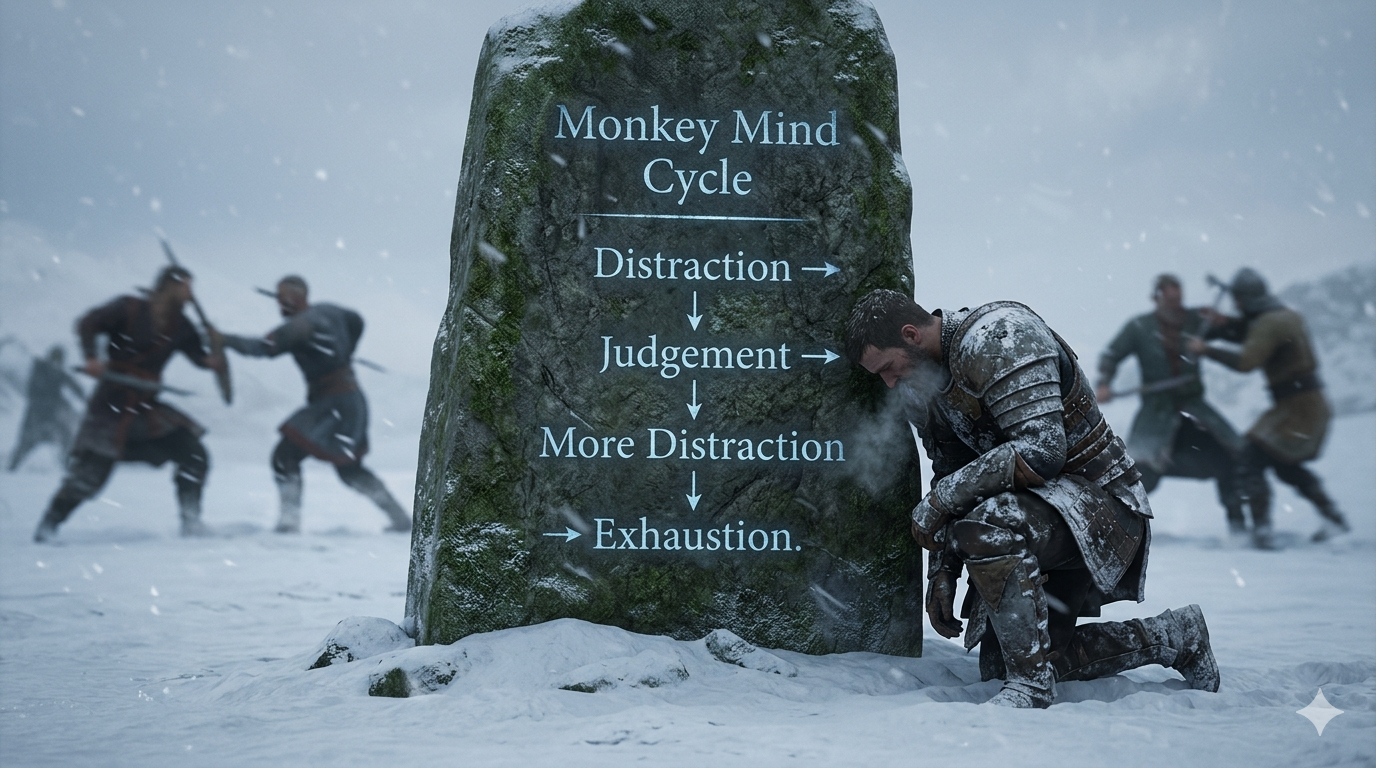
Alt text: Flowchart showing how the monkey mind feeds on self-criticism.
But here’s the twist: You can’t kill it by force. Aggression only feeds the monkey. The goal is to starve it of attention, not to battle it. As the Tibetan saying goes, “Don’t push the monkey out the window – invite it to sit still and have tea.”
Step 1: Stop Trying to “Kill” – Start Observing
Search data shows thousands of people ask “how to kill a monkey mind” each month. But the #1 mistake is treating your thoughts as enemies.
Try this instead:
- Label the monkey – When you notice a distracting thought, silently say “planning”, “worrying”, or “replaying”.
- Don’t engage – Let the thought complete its circuit without your emotional fuel.
- Return to the breath – Use a 4‑second inhale, 4‑second exhale as your anchor.
🔗 Internal link: Check our 5‑minute mindfulness script for beginners (coming soon).
Step 2: Starve It with Structured Focus
The monkey mind thrives on open loops and multitasking. To “kill” its power:
- Time‑block your day – Use Pomodoro (25 min work, 5 min break).
- Single‑task – Close all other browser tabs. Put your phone in another room.
- Write down “later” thoughts – Keep a notepad nearby. When a monkey‑thought jumps in (“I should pay that bill”), jot it down and return to work.
![Image: A desk with a “Distraction List” notepad, a ticking timer, and a closed laptop – visual of structured focus.]
Alt text: Workspace setup with distraction notepad and Pomodoro timer.
Step 3: Physical “Monkey” Triggers – What to Cut Out
Sometimes the monkey is fed by biology:
TriggerEffect on MindAction to TakeExcess caffeineJumps between thoughtsReduce to 1 cup before noonSleep debtLow impulse controlAim for 7–8 hoursSocial media feedsConstant dopamine spikesUse an app blocker (e.g., Freedom or Cold Turkey)
A Note on Ethics (For the Literal‑Minded)
If you landed here searching for actual ways to harm a primate – please don’t. Monkeys are intelligent, often endangered, and deserve protection. Instead, support organisations like the World Wildlife Fund or Neos (monkey sanctuaries). This article is 100% metaphorical.
Final Takeaway: You Don’t Kill the Monkey – You Befriend It
The most productive, calm people haven’t silenced their inner voice. They’ve learned to hear it without obeying it.
“The monkey is not your enemy. The attachment to its every swing is.”
Try one technique from above today. Your mind will still jump – but you won’t have to follow.
![Image: A calm person sitting by a window, smiling slightly, with a small monkey plush toy on the desk – symbol of tamed chaos.]
Alt text: Person at desk with monkey plushie – metaphor for befriending the restless mind.
Ready to go deeper
👉 Read next: Why Your Brain Loves Distraction (And How to Hack It)
👉 Download our free Monkey Mind Tamer Cheat Sheet (PDF
great read
You don’t know what you are saying. I could’ve killed alot!
Okay then, that’s just right.